“A Journey into Exile” Session at the Diocesan Formation Center of Quebec
23 October 2026|JRS Canada
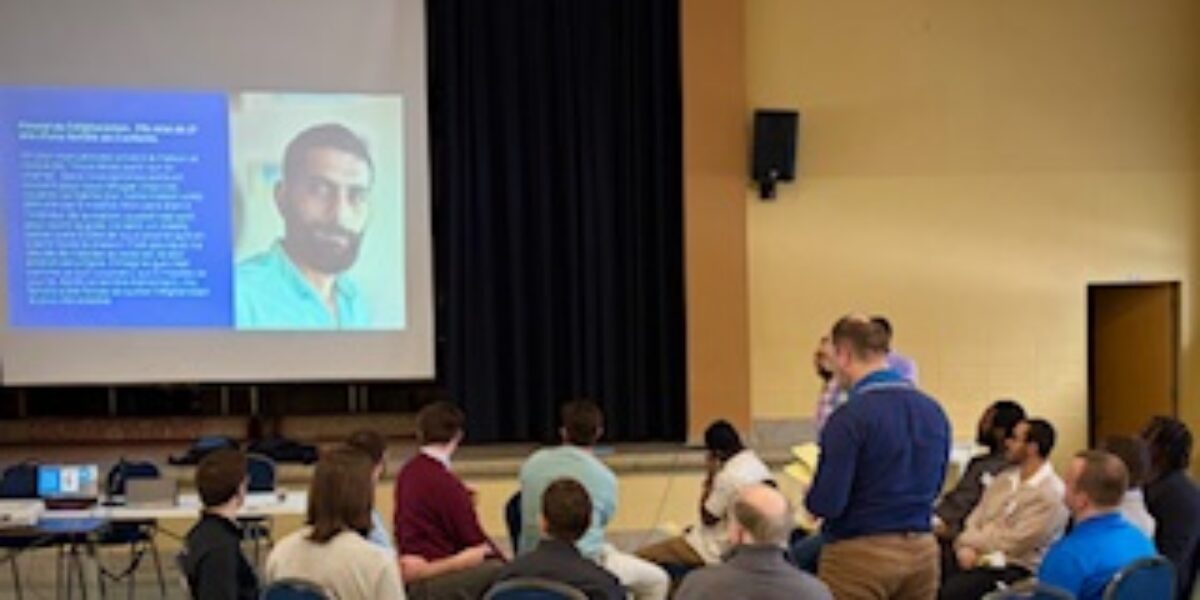
On Saturday, March 21, 2026, Tevfik Karatop, project coordinator of A Journey into Exile at the Jesuit Refugee Service (JRS), together with Jean Gardy Joseph, community outreach worker at JRS, facilitated a session at the Diocesan Formation Center of Quebec. The activity brought together approximately 40 participants, including seminarians from the Archdiocese of Quebec and various religious communities, permanent deacons, and laypersons. All were gathered as part of a social pastoral formation led by Gilles Mongeau, SJ.
According to the general feedback, the highlight of the day was the simulation, which deeply impacted participants through its intensity and realism. It enabled them to experience from within the complexity of migratory journeys, fostering a profound and lasting awareness.
Both immersive and formative, the activity encouraged strong emotional engagement, authentic exchanges, and a renewed perspective on the dignity of refugees. It was widely perceived as a transformative experience, one that is difficult to replicate through theoretical teaching alone.
Several participants expressed the desire for this simulation to be offered to other groups, confirming its strong pedagogical relevance, as noted by Gilles Mongeau. The symbolic gesture of removing one’s shoes at the beginning of the activity also left a deep impression: «It made me more aware of the hardship these people endure, » shared one participant.
According to participants, the simulation made tangible the precariousness and lack of viable solutions faced by people in forced migration. It revealed the deeply human reality behind statistics and public discourse: «Refugees are not numbers; they are human beings,» affirmed another participant.
 Many also mentioned that this experience now makes it difficult for them to hear negative comments about refugees without reacting internally. The scenarios presented during the simulation were particularly striking: impossible choices between dangerous routes, heartbreaking decisions regarding children, and the absence of safe or just options. «When all paths are dangerous, how can they choose? » questioned one participant. This dimension was experienced as both formative and deeply moving.
Participants identified several key outcomes: a renewed understanding of migrant pastoral care, a deeper grasp of the three dimensions of learning (being, doing, and knowing) in real-life situations, and a lasting inner transformation that persisted beyond the session. «Throughout the day, I was moved, and I still am, » shared one participant. Some even expressed the desire to bring this simulation to other groups, particularly students, as highlighted in the overall synthesis of the training day.
Finally, the concluding synthesis emphasized that the A Journey into Exile simulation was the pedagogical core of the day: an immersive, transformative, emotionally powerful, and deeply formative experience. It enabled embodied learning, which is difficult to achieve through lecture-based teaching alone.